Understanding Classification Systems in Adaptive Golf
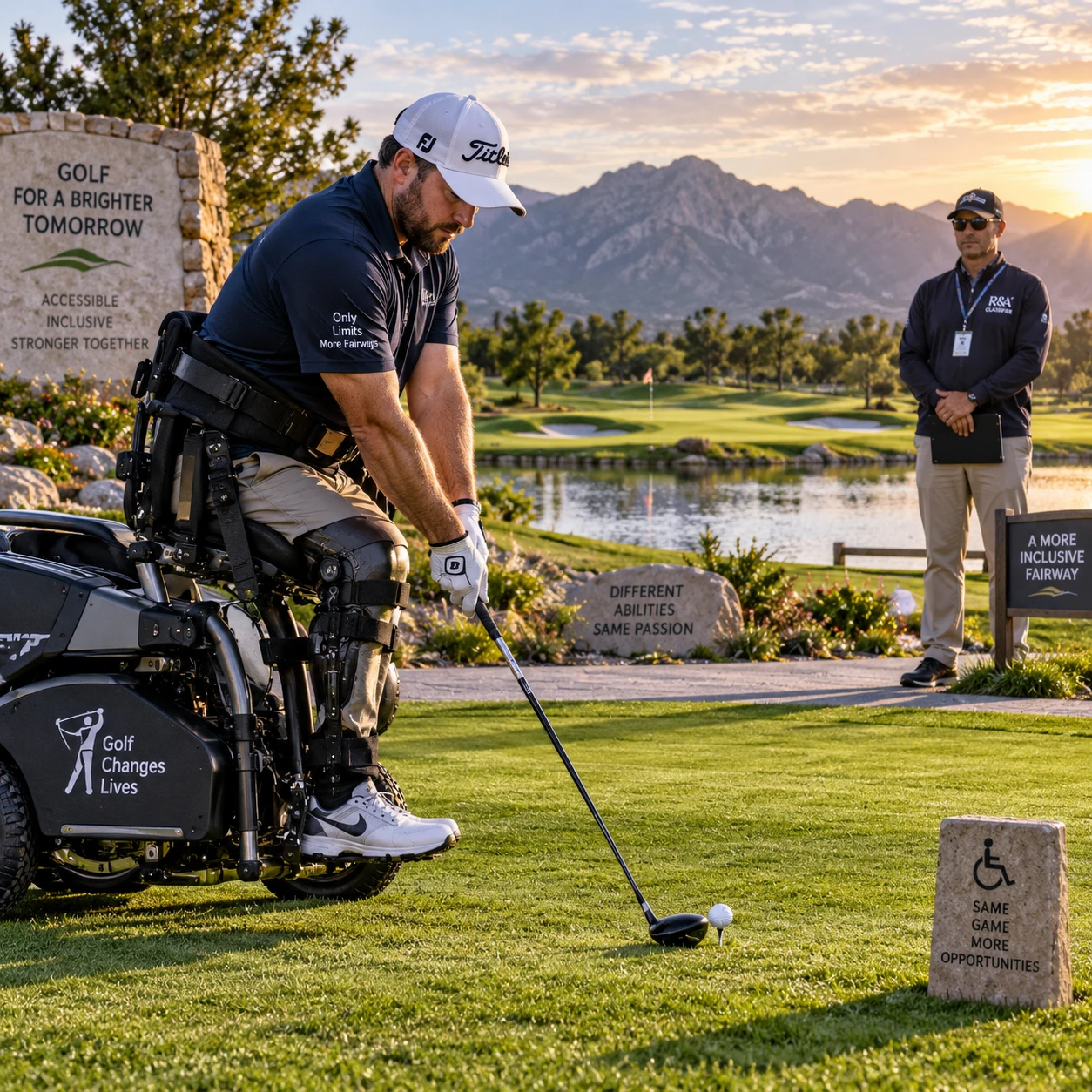
Classification systems help adaptive golf competitions organize participation with fairness and access in mind. They consider how an eligible impairment may affect golf-related function, while recognizing that a golfer’s diagnosis alone does not describe how they swing, move around a course, or play the game.
There is no single set of categories or assessment process that applies to every adaptive golf event. Rules can vary by organizer, governing body, and competition, so golfers should check the current official guidance for the event they plan to enter.
What classification means in adaptive golf
In adaptive golf, classification is a process for considering whether an impairment meets an event’s criteria and how it may affect activities relevant to the sport. It is not a medical diagnosis and does not measure golfing skill, potential, or personal worth.
The key distinction is between impairment and functional ability. A medical record may explain a health condition, but classification focuses on the criteria set by the relevant adaptive golf organization and, where applicable, the condition’s impact on golf-related tasks. Those tasks might include maintaining balance, moving around the course, gripping a club, or making a golf swing.
For instance, two golfers with the same diagnosis may have different ranges of motion or mobility. Conversely, different diagnoses may affect a similar movement. These are illustrative examples, not a prediction of how a specific event will classify either golfer. Classification is tied to competition rules, not a broad judgment about who is or is not disabled.
Classification is separate from ability on the scorecard. A golfer’s handicap, scoring record, or competitive experience does not by itself establish an impairment category. Classification addresses access and competition structure; performance is assessed through the game.
Why classification matters
Classification matters because it can help adaptive golf competitions apply eligibility and competition rules consistently while supporting meaningful participation. Its aim is to account for relevant differences in functional impact, not to guarantee identical abilities or outcomes.
Golf combines several demands: a golfer may need to create a controlled swing, stabilize their body, walk or use another means of course mobility, and manage equipment. An impairment can affect one or more of these demands in different ways. A competition framework may use classification information to organize categories or determine eligibility, depending on its own rules.
This can help organizers offer competition that is accessible and structured, while helping participants understand which entry requirements apply. It can also make conversations about support more precise. Instead of assuming that a particular diagnosis automatically determines what a golfer can do, an event can refer to its published criteria and assessment process.
There are limits. A category cannot capture every detail of a person’s experience, and classification does not remove all differences between competitors. A system that is too broad may group golfers with unlike functional profiles; a more detailed system may require greater administrative effort and assessment. Fair play depends on transparent, consistently applied rules, alongside practical accessibility such as suitable course access and event support.
What may be considered during classification
Classification may consider an eligible impairment and its effect on golf-related function, but the exact factors depend on the organization’s rules. Relevant areas can include mobility, balance, coordination, limb function, grip, and the ability to perform parts of the golf swing.
An assessment framework may look at how a golfer performs particular movements or tasks, rather than relying only on the name of a condition. Depending on the event, potential considerations could include:
- Mobility and course movement: how an impairment affects walking, balance, or moving through the playing environment.
- Upper-limb function: how grip, strength, range of motion, or control relates to holding and moving a club.
- Stability and coordination: how a golfer maintains posture or coordinates movements during a swing.
- Use of equipment or adaptations: whether an assistive device or modified technique relates to the event’s eligibility and competition rules.
This list is general, not a universal checklist. Some factors may be outside a particular system’s criteria, and a functional difference does not automatically qualify someone for a category. Similarly, needing an adaptation or experiencing difficulty on a course does not, by itself, determine eligibility. The relevant rules define which impairments and impacts count.
It is useful to separate classification from accessibility. Classification may address competition eligibility or grouping. Accessibility concerns whether facilities, transport, pathways, communications, and event arrangements allow people to take part. Both matter, but they answer different questions.
How an assessment may work
A classification assessment generally checks information against the relevant event’s criteria, but the steps, assessors, and documents vary. Participants should use the organizer’s current instructions rather than assume another event follows the same process.
Depending on the system, the process may involve reviewing medical or supporting information, discussing functional effects, and observing relevant movements or golf-related tasks. The assessment is intended to apply published criteria. It is not a test of whether a person is a good golfer, and an assessor’s role is not to judge someone’s character or commitment.
A practical preparation sequence is:
- Find the official rules. Ask the event organizer or governing organization which classification policy applies and whether assessment is required before entry.
- Check eligibility details. Confirm accepted impairment types, documentation requirements, deadlines, and whether a previous classification can be used.
- Prepare relevant information. Follow the organizer’s instructions about medical records or other evidence. Avoid sending sensitive information to people or channels that are not authorized.
- Ask about logistics. Clarify assessment location, accessibility arrangements, communication support, and whom to contact with questions.
- Keep written decisions and next steps. If an outcome is provisional, review, or subject to appeal, follow the stated process and deadlines.
Not every event will use every step. An assessment may also be affected by the information available or by the rules in force at that time. For that reason, confirm whether a decision applies only to one event or can be recognized elsewhere.
Classification, competition, and eligibility
Classification can affect whether a golfer meets an event’s athlete eligibility requirements and which competition category or rules apply. The outcome depends on that event’s published policy; there is no universal adaptive golf category structure.
Organizers may use classification to create categories, set entry conditions, or determine how a competition is conducted. Other events may have different formats or requirements. A golfer should not assume that a classification from one organization automatically transfers to another, or that every adaptive golf competition requires formal classification.
Check the event guidance for details such as:
- Which impairments and functional impacts the competition recognizes.
- Whether classification is required for entry, a particular category, or not at all.
- How prior decisions are accepted and whether reassessment may be needed.
- Any relevant rules for equipment, course access, or competition format.
- How to request clarification, review, or appeal if those options are available.
These details matter in practice. A golfer might be eligible to participate in an inclusive event but not meet the criteria for a specific classified category. Another event may use a different structure. The organizer’s current written rules are the reliable source for both athlete eligibility and competition requirements.
Common misconceptions and practical next steps
Common misconceptions include treating classification as a diagnosis, assuming a diagnosis determines a category, and believing every adaptive golfer needs classification. The best next step is to check the specific event’s rules and ask its organizer how eligibility is assessed.
Is classification the same as a medical diagnosis?
No. A diagnosis identifies a health condition; classification applies an organization’s sport-specific criteria. Medical information may support an assessment, but the two processes serve different purposes.
Does every adaptive golfer need a classification?
No. Requirements vary. Some competitions may require classification for entry or a particular category, while other adaptive golf opportunities may not use a formal classification system. Confirm the requirement before registering.
Can classification systems differ between events?
Yes. Organizations and competitions can set different eligibility criteria, categories, documentation requirements, and assessment procedures. A decision made for one event may not automatically apply to another.
Does classification determine a golfer’s skill level?
No. It concerns eligibility and, where relevant, competition organization. It does not rank technique, experience, handicap, or potential.
When reviewing an event, look for its official classification policy, eligibility rules, and contact information. If the guidance is unclear, ask specific questions before making travel plans or submitting personal medical information. Respectful classification recognizes both the individual golfer and the limits of the system: it can support fair play, but it cannot describe every aspect of a person’s abilities or remove the need for accessible facilities and inclusive event planning.