The Role of Guides in Visually Impaired Golf
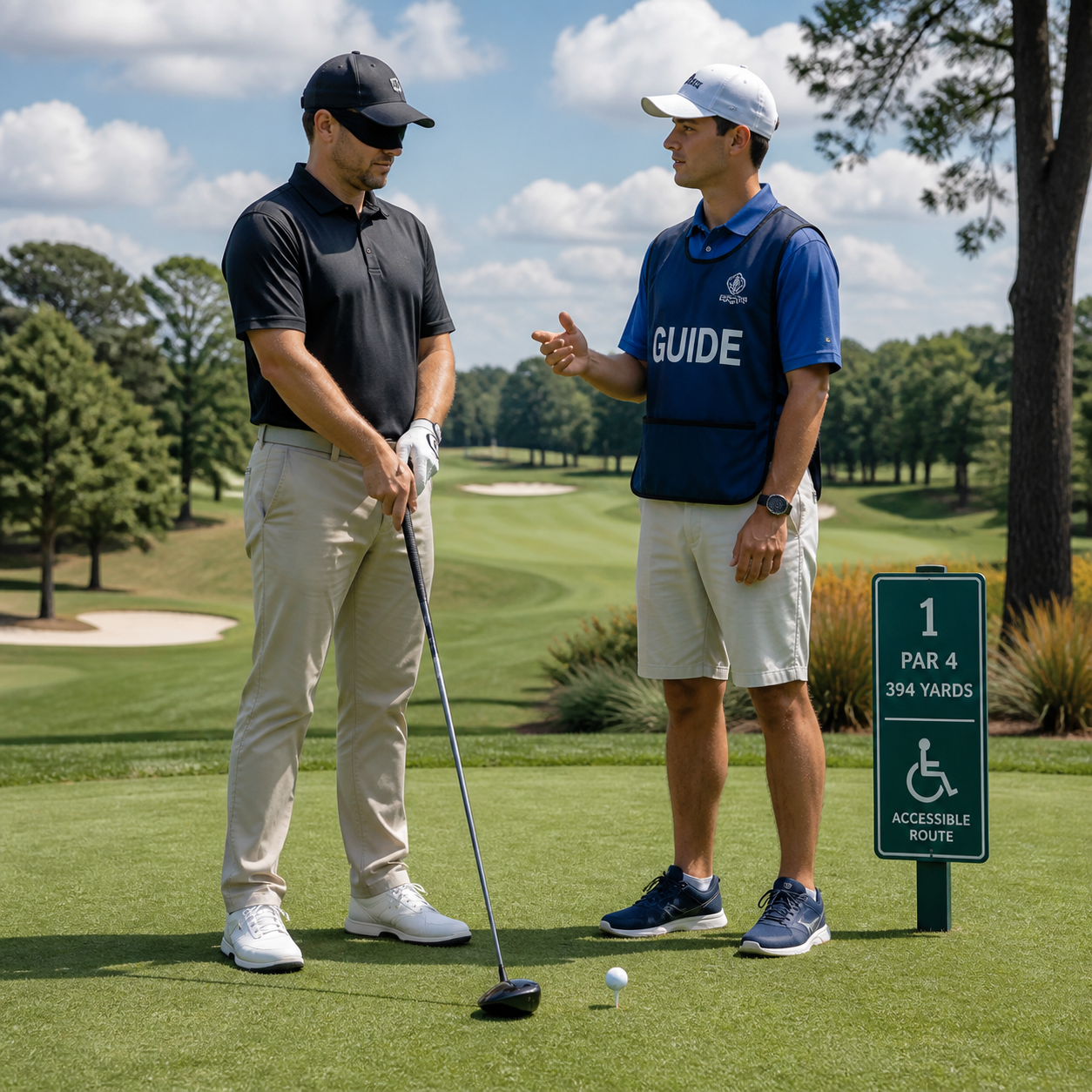
Visually impaired golf depends on teamwork, but the golfer remains the central decision-maker. A skilled golf guide helps interpret the course, communicate useful information, support safe movement, and provide agreed technical feedback so the player can choose and execute each shot with greater confidence.
The strongest relationships are built around respect rather than rescue. In adaptive golf, guidance should expand access to the course while preserving the golfer’s control, routine, and identity as an active competitor.
What Is a Guide in Visually Impaired Golf?
A guide in visually impaired golf is a trusted partner who describes relevant course information, supports orientation and alignment, and helps the golfer play safely and independently. The guide does not replace the golfer’s judgment or make every decision on the player’s behalf.
Depending on the golfer’s level of sight, experience, and personal preference, a guide may stand behind the player during a shot, walk alongside them between shots, or provide information from a suitable position. Some golfers need detailed verbal descriptions; others prefer short distance and direction cues.
Guide support can include:
- Explaining the location of tees, fairways, greens, bunkers, water hazards, slopes, and out-of-bounds areas.
- Helping the golfer understand the shape, width, and playing direction of a hole.
- Providing alignment and positioning information before the swing.
- Describing the lie of the ball and nearby ground conditions.
- Offering agreed swing feedback after the shot.
- Helping with safe course navigation without physically directing the golfer unless that assistance has been requested.
The amount of help should change with the setting. An unfamiliar course may require extensive course orientation, while a familiar home course may call for only a yardage, target, and alignment check. The goal is useful information at the right moment, not a constant stream of commentary.
Key Responsibilities of a Golf Guide
A golf guide supports visually impaired golf by turning visual course details into clear, actionable information while protecting safety and the golfer’s autonomy. The most effective guide separates essential facts from unnecessary noise.
Course orientation and navigation
Before play, the guide can describe the route from the clubhouse to the first tee, the position of practice areas, changes in elevation, paths between holes, and fixed landmarks. During the round, the guide should identify transitions such as steps, steep slopes, bridges, cart paths, and uneven ground.
Good course navigation uses consistent reference points. For example, a guide might explain that a green is beyond a shallow dip, with a bunker short-right and a cart path behind it. The description should be accurate, brief, and connected to the golfer’s intended shot.
Hazard awareness and shot information
A guide may describe hazards, landing areas, wind direction, green contours, pin position, and the distance to a target. Information should support decision-making rather than dictate it. Saying, “The fairway narrows at approximately 190 yards, with water left and room right,” gives the golfer options. Saying, “Hit this club,” removes choice unless the golfer has specifically asked for club advice.
Alignment and positioning
Alignment support helps the golfer aim the clubface and body toward the chosen target. The guide and golfer should agree whether the guide will position the club, describe the target line, use clock-face references, or provide a physical alignment check that complies with the relevant rules.
Small details matter. The guide may confirm whether the golfer’s feet are parallel to the target line, whether the clubface points toward the intended landing area, and whether the ball sits above or below the golfer’s stance.
Swing feedback and safety
Feedback should be specific and requested or pre-agreed. Useful comments describe observable outcomes, such as tempo, balance, contact, or finish position. A guide is not automatically a golf instructor, so technical changes should be discussed carefully and ideally aligned with the golfer’s coach.
Safety takes priority over speed. The guide should warn about nearby players, moving carts, exposed roots, drop-offs, and balls in play. When conditions are uncertain, stopping to reassess is better than forcing a hurried decision.
Communication Between Golfer and Guide
Effective communication between golfer and guide uses agreed words, predictable timing, and two-way confirmation. Clear instructions reduce uncertainty, while feedback from the golfer allows the guide to adjust the level of detail.
Before a round, establish a shared vocabulary for:
- Direction: left, right, straight, target line, or clock-face positions.
- Distance: total distance, carry distance, front and back of the green, and distance to hazards.
- Alignment: clubface, feet, shoulders, stance, and target reference.
- Course movement: steps, slopes, curbs, paths, and changes in surface.
- Timing: when information is given and when silence begins before the swing.
For example, the golfer might prefer this sequence: “Ball is on a level lie. Target is the center of the green, 125 yards. Bunker is short-left. Wind is helping from behind. Clubface is one degree right of target.” The golfer then confirms the plan, settles into position, and receives no further instruction unless safety requires it.
Ask what the golfer wants to know instead of assuming. Some players want a full hole description before choosing a club; others want information in stages. A phrase such as “description complete” can signal that the guide has finished speaking, while “repeat target” gives the golfer a simple way to request clarification.
Communication also includes consent. A guide should ask before touching a club, arm, shoulder, or body position. Physical assistance may be appropriate in certain situations, but it should never be automatic.
Building Trust and a Strong Golfer-Guide Partnership
A strong golfer-guide partnership develops through preparation, reliability, honest feedback, and respect for the golfer’s preferences. Trust grows when the guide is accurate, calm, and consistent, especially after an imperfect shot.
The relationship works best when responsibilities are discussed openly. The golfer should explain preferred descriptions, mobility needs, swing routines, and boundaries. The guide should explain what they can observe confidently and where they may need clarification.
A practical partnership framework
Use the FACT framework before playing: Familiarize yourselves with the course; Agree on communication and physical boundaries; Confirm the player’s preferred decisions and routines; then Track what worked after the round. This simple cycle prevents assumptions from becoming habits.
Trust does not mean avoiding difficult conversations. If a guide repeatedly gives late alignment cues, the golfer should describe the problem and test a different routine. If the golfer asks for swing feedback that the guide cannot reliably provide, the guide should say so rather than guess.
Respect also means allowing quiet. Constant encouragement can become distracting, particularly in competition. A calm guide may contribute more by waiting, observing, and speaking only when the agreed cue is needed.
Guides During Practice and Competition
During practice, a guide can help the golfer learn a course, test communication methods, and review patterns; during competition, support must follow the applicable golf competition rules and event regulations.
Practice provides room to experiment. A golfer and guide can compare different target descriptions, rehearse green-reading language, walk landing areas, and identify safe routes between holes. They can also review whether information arrived early enough for the golfer to make a confident decision.
Competition requires greater discipline. Before entering an event, check the current rules of the governing body and the tournament’s specific conditions of competition. The R&A Rules of Golf and the USGA Rules of Golf provide authoritative starting points, but an event committee may apply additional requirements for guides and players.
Rules can address matters such as who may act as a caddie or guide, where a guide may stand, how alignment assistance is provided, and what communication is permitted during a round. Never rely on a general online summary when an official ruling could affect eligibility or a penalty.
A competition routine might include:
- A pre-round check of terminology, equipment, weather, and first-tee procedure.
- A consistent description of each hole before the golfer selects a strategy.
- Silence during the golfer’s final setup unless a safety issue arises.
- Brief post-shot information focused on location, lie, and the next decision.
- A post-round review that separates rule questions from performance emotions.
Choosing and Preparing a Guide
Choose a guide for reliability, listening ability, patience, and willingness to learn, then prepare together through course walks, practice rounds, and clearly defined roles. A golfer does not need the most technically knowledgeable person if that person communicates poorly.
Consider these qualities:
- Accuracy: the guide checks distances and descriptions rather than guessing.
- Awareness: the guide notices safety risks and changing course conditions.
- Restraint: the guide offers relevant information without taking over.
- Adaptability: the guide changes detail, tone, and timing to suit the golfer.
- Emotional steadiness: the guide stays composed after poor shots or stressful delays.
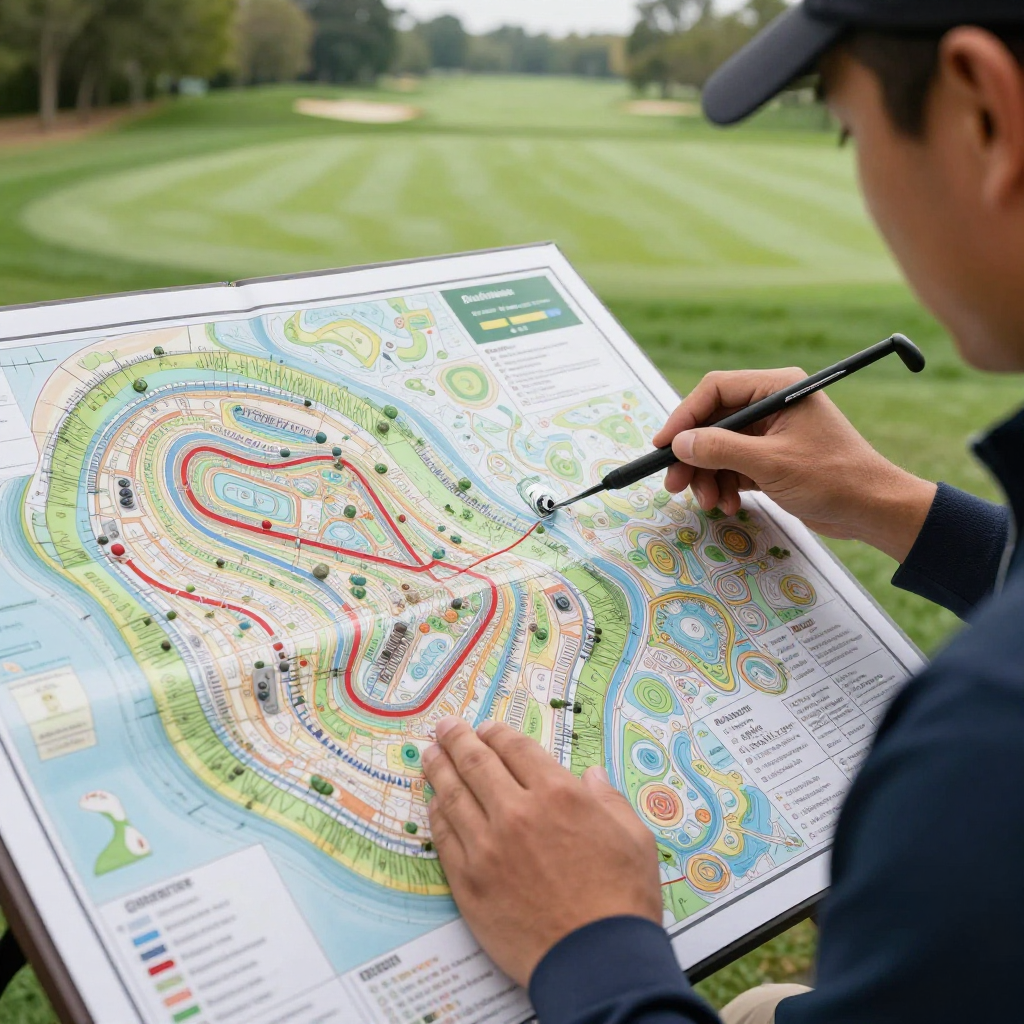
Start with a course walk. Discuss tee locations, green entrances, hazard lines, slopes, shelter, toilets, and safe paths. Then conduct a practice round with deliberate pauses. After each hole, ask three questions: What information helped? What arrived too late? What should be omitted next time?
Clarify practical matters as well. Agree on transport, weather preparation, pace of play, communication devices if permitted, and what happens if the guide becomes unavailable. A backup plan protects the golfer’s participation and reduces pressure on the relationship.
How Guides Promote Confidence and Independence
Effective guides promote confidence and independence by giving the golfer dependable information while leaving strategy, club selection, and shot execution with the player. Support should make decisions easier to access, not make them for the golfer.
Independence in visually impaired golf does not require doing every task without assistance. It means having meaningful control over the process: understanding the hole, choosing a target, selecting a shot, evaluating the result, and improving through experience.
A useful test is the decision ownership check: after receiving guidance, can the golfer explain the target, the main risk, and the intended shot in their own words? If yes, the guide has likely supported agency. If the golfer is simply following unexplained commands, the partnership needs adjustment.
Over time, a consistent guide can help the golfer build a mental map of recurring features, recognize patterns in lies and slopes, and develop a repeatable pre-shot routine. That learning can increase confidence even when the guide provides less information on a familiar hole.
Guidance has limits. It cannot remove weather changes, pace-of-play pressure, uncertain bounces, or the normal challenge of golf. Its value lies in making those challenges navigable and shared, so the visually impaired golfer can compete, practice, and enjoy the course on their own terms.
Frequently Asked Questions
What does a guide do for a visually impaired golfer?
A guide describes the course, supports navigation, identifies hazards, helps with alignment, provides agreed feedback, and promotes safety. The golfer remains responsible for making playing decisions.
Can a guide give swing or shot advice?
A guide can give swing or shot feedback when the golfer has requested it and the role has been agreed in advance. Advice should remain within the guide’s competence and must follow applicable competition rules.
How should a golfer and guide communicate on the course?
They should use consistent terminology, agree when information will be given, confirm important details, and protect quiet time during the golfer’s setup and swing.
What qualities make a good golf guide?
A good golf guide is accurate, patient, observant, respectful, adaptable, safety-conscious, and willing to listen. Reliability and communication often matter more than playing ability.
Are there different guide responsibilities in competition?
Yes. Competition may limit where a guide stands, what assistance is allowed, or how the guide may act. Players should review the event conditions and consult the relevant governing body or committee before play.