The Science Behind Auditory Golf Balls and Equipment
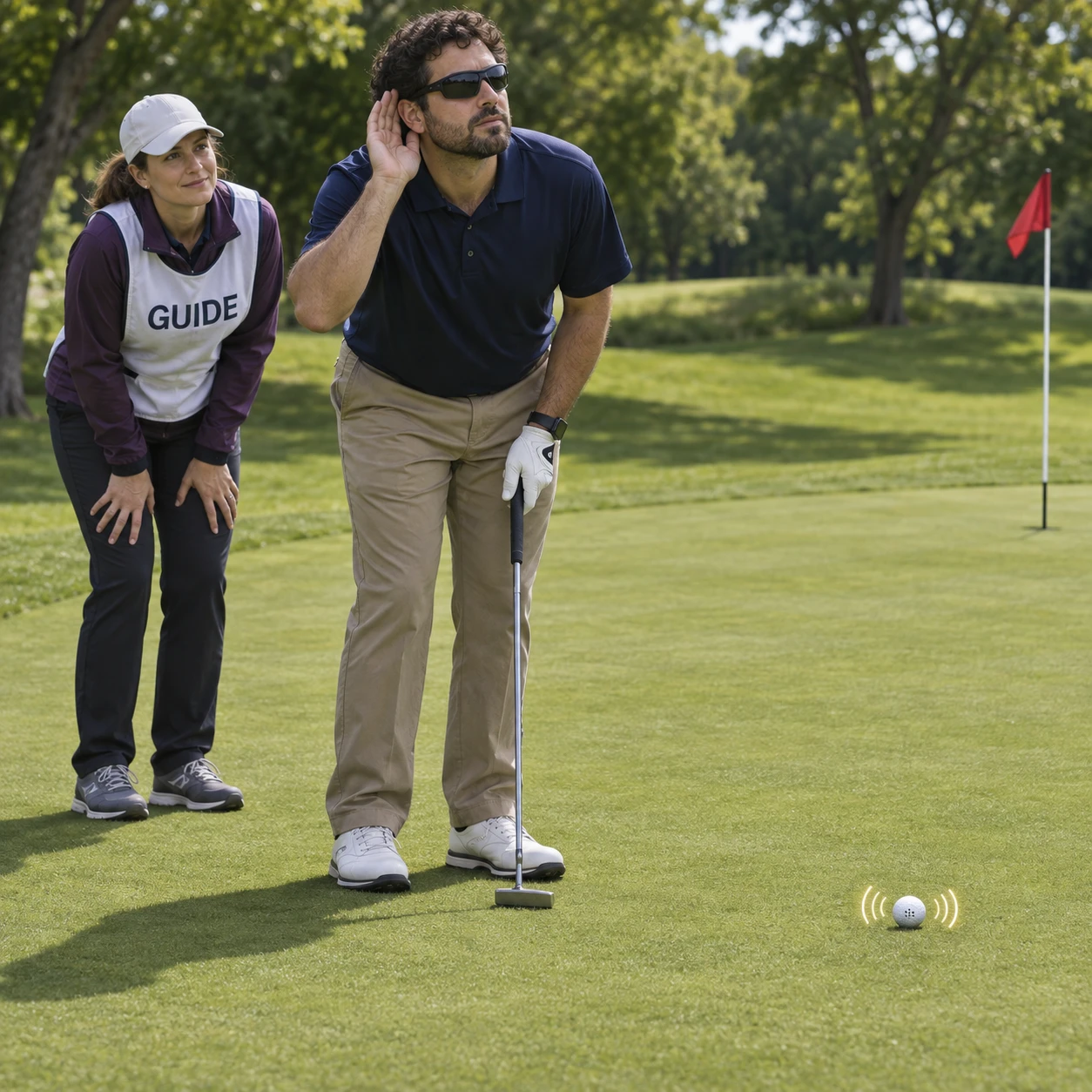
For a golfer who cannot rely on sight to follow a shot, sound can provide a useful clue to where the ball has gone. An auditory golf ball produces a signal that helps a player locate it, while adaptive equipment, communication, and course routines address the many parts of golf that sound alone cannot solve.
The goal is not to make every shot effortless. It is to give visually impaired golfers another source of information, support choice and independence, and make participation more practical and safe.
What Makes a Golf Ball Auditory?
An auditory golf ball produces an audible signal that helps a golfer locate it after a shot. Depending on the design, sound may come from an embedded sound source or from a feature that makes noise as the ball moves.
The basic idea is straightforward: a player listens for the signal and uses changes in its apparent direction or loudness as a clue to the ball’s location. The sound source must be part of the ball or its operation; it is not the same as a guide calling out where a conventional ball has landed.
That simple cue can matter because a golf shot quickly travels beyond the golfer’s immediate reach. A sound can help narrow the search area and distinguish the ball’s position from the surrounding terrain. But it does not provide a precise visual picture of distance, lie, hazards, or the route to the ball.
Sound is one input, not a complete replacement for vision. Its usefulness depends on how clearly the signal can be heard, the environment, the golfer’s hearing, and the way the player and any partner coordinate. Designs and availability can vary, so golfers should check product details and try equipment where possible rather than assume all auditory balls work alike.
How Sound Helps Players Track the Ball
Sound helps players track a ball by providing an audible reference before, during, and after a shot. Listening can help orient the golfer, follow the ball’s movement when the signal remains perceptible, and find the resting location.
Before the shot, the golfer may listen to the surroundings and establish where the target area and playing partner are. After striking the ball, the player listens for the signal and for its direction or changing loudness. Once the sound seems stable, the golfer can move toward it carefully, often with a guide or playing partner offering additional information.
Sound does not always reveal the ball’s exact flight. A brief signal may be hard to follow over a long distance, and trees, slopes, wind, or other course features can affect how sound reaches the listener. A ball that stops in rough, near a path, or close to another sound source may be harder to identify than one in an open area.
Environmental noise is a major factor. Wind in trees, nearby golfers, carts, maintenance equipment, and conversation can mask an audible signal. A useful routine is to pause after the shot, reduce avoidable conversation, and let the player listen before anyone starts calling directions. If the signal is unclear, the group can switch to agreed verbal guidance instead of guessing.
Listening works best as a deliberate process. The player can take a moment to locate the sound, ask for a direction cue, then move in stages. This gives the golfer time to interpret the signal and helps prevent several people from speaking at once.
The Equipment Beyond the Ball
Auditory golf balls work best as part of a broader set of adaptive golf equipment and support. Verbal cues, suitable clubs, and a trusted guide or playing partner can help with tasks the ball’s signal cannot cover.
A guide may help the golfer orient to the tee, describe the target line, identify nearby hazards, and communicate where the ball appears to have stopped. The golfer should decide what kind of assistance is useful: some may prefer concise directions, while others may want more detail or time to assess the situation independently.
Clubs and other equipment can support consistency and comfort, but they do not remove the need to understand the shot and the surroundings. Players may use familiar club arrangements, tactile ways to identify equipment, or verbal routines to confirm the club and intended target. The right approach depends on the golfer’s experience, mobility, hearing, and preferences.
Other assistive technology may help with orientation or communication, but equipment should be chosen for the task it actually performs. A device that helps identify a ball does not necessarily guide a swing, assess a lie, or make a course safe to cross. The broader system is the combination of the golfer’s skills, the audible cue, partner support, and agreed safety procedures.
The golfer remains the decision-maker. A guide can provide information, but should not assume that every visually impaired player wants the same level of help. Clear communication before play makes support more useful and respectful.
Using Auditory Equipment on the Course
To use auditory equipment safely, agree on communication and movement routines before the first shot, then adjust them to the course and listening conditions. The golfer, guide, and other players should know when to stay quiet, when to give a cue, and how to confirm that the landing area is clear.
A practical setup can follow four steps:
- Check the equipment. Confirm that the audible signal is working as intended and that the golfer is comfortable hearing it before play begins.
- Agree on language. Use short, consistent directions such as left, right, short, or long, and clarify what each means from the golfer’s position.
- Listen before moving. Give the player a quiet moment after the shot to locate the signal and request more information.
- Move with a safety plan. Confirm the route and nearby players, carts, water, steep ground, or other hazards before walking toward the ball.
Course safety depends on more than hearing the ball. A signal may locate the ball without indicating whether the approach crosses a cart path or another group’s line of play. The guide and golfer should communicate about hazards and wait for a safe moment to move. Groups nearby should also understand that a pause may be needed for listening.
Before a round, consider testing the equipment in a quiet practice area and then in conditions closer to the course. This can reveal whether wind, background conversation, or the golfer’s usual hearing aids affect the signal. If the cue becomes difficult to distinguish, stop and use the agreed backup method rather than continuing on uncertain information.
Benefits and Limitations of Sound-Based Assistance
Sound-based assistance can help visually impaired golfers locate a ball, orient themselves, and take a more active role in play. Its limits are equally important: an audible signal does not explain every feature of the shot or guarantee that the route to the ball is safe.
When it works well, the signal gives the player information that might otherwise come only from another person. That can reduce reliance on constant verbal searching and allow the golfer to participate more directly in locating the ball. Sound can also support confidence by giving the player a cue to interpret and act on.
However, auditory equipment can be less useful when noise masks the signal, when the golfer has difficulty hearing its frequency, or when terrain and distance make direction hard to judge. It also cannot describe the ball’s lie, identify every hazard, or tell a player how to make a swing. Those tasks may call for a guide, tactile information, course knowledge, or another strategy.
A common mistake is treating the ball’s sound as a precise locator. The signal may narrow the search without pinpointing the ball, so players should verify the location rather than walk quickly toward an uncertain cue. Another mistake is having several people call out at once. That creates competing signals; one agreed speaker and concise directions are usually easier to follow.
Independence does not mean playing without support. It means the golfer has meaningful control over decisions and can choose which tools and assistance help. For one player, the ball’s signal may be enough to find an open fairway landing; another may prefer a partner’s guidance at every stage.
Choosing Equipment for an Individual Golfer
Choose auditory golf equipment by matching the signal and support plan to the golfer’s hearing, playing environment, comfort, and preferences. The best setup is the one the golfer can interpret reliably and wants to use, not the one with the most features.
Start with hearing and signal clarity. Can the golfer distinguish the ball’s cue from wind, voices, or other course sounds? If hearing aids are used, test the equipment with them in the settings where the golfer expects to play. Avoid assuming that a signal that works for one person will work equally well for another.
Next, consider the course. An open, quiet practice area presents different listening conditions from a busy course with carts, trees, and nearby groups. Think through the likely noise, terrain, and distance involved, then decide what backup communication will be available if the signal is lost.
Comfort and autonomy matter too. The golfer should have time to test the equipment, explain preferred directions, and decide how much assistance a guide should provide. A simple trial can answer practical questions: Is the sound easy to recognize? Does it remain useful in realistic conditions? Is the ball comfortable to play? Does the full routine feel safe?
- Prioritize: an audible cue the golfer can hear and interpret.
- Plan for: background noise, hazards, and occasions when the signal is unclear.
- Agree on: guide communication, movement, and who speaks during play.
- Reassess: the setup as the golfer’s skills, preferences, or course conditions change.
There is no single equipment choice for all visually impaired golfers. A sound-based approach is most effective when it fits the individual and works alongside clear communication, adaptive techniques, and safe play.
Frequently Asked Questions
How does an auditory golf ball help a golfer find the ball?
An auditory golf ball produces a sound that gives the golfer a clue to the ball’s direction or location. The signal may narrow the search area, though the golfer may still need a guide or verbal directions to confirm the ball and assess the surroundings.
Does auditory equipment help with every part of a golf shot?
No. It can support ball tracking and location, but it does not automatically describe the target line, swing, lie, or hazards. Players may combine it with a guide, communication routines, and other adaptive techniques.
What other adaptive equipment can support visually impaired golfers?
Depending on the golfer, useful support may include audible cues, familiar or tactile club-identification routines, and assistance from a guide or playing partner. The choice should match the task and the golfer’s preferences.
How can players reduce confusion from background noise?
Agree on one person to give directions, use consistent short phrases, and pause conversation after a shot so the golfer can listen. If the ball’s signal remains unclear, use the planned verbal backup and move only after checking the route for hazards.