Training Regimens for Visually Impaired Athletes: A Guide for Adaptive Golf
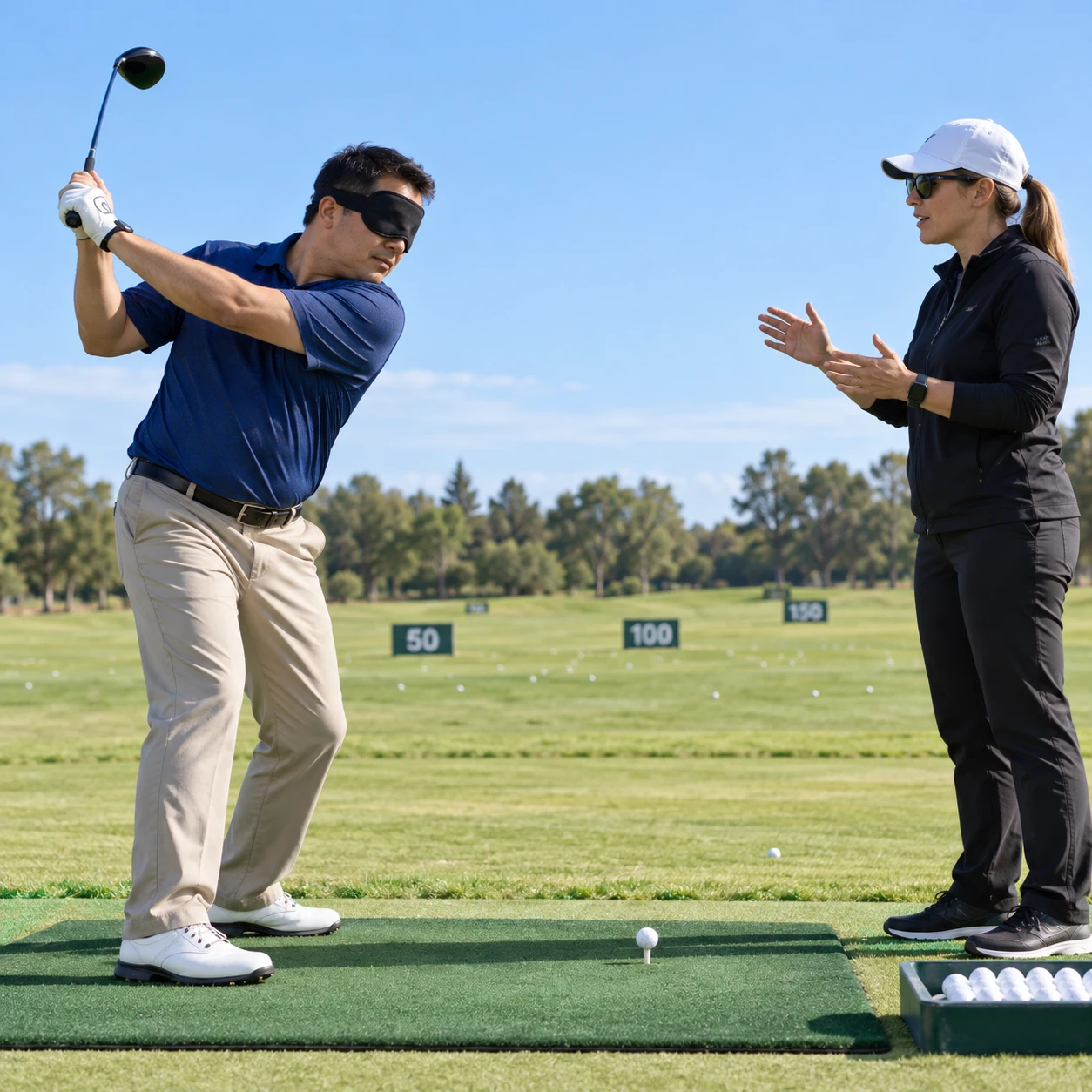
Effective training for visually impaired athletes starts with the individual, not a standard drill sheet. In adaptive golf, a well-designed training plan combines golf swing practice, accessible communication, physical conditioning, and predictable safety routines. The right mix depends on an athlete’s vision, experience, mobility, preferences, and goals.
Whether the goal is to enjoy a first round, improve putting consistency, or prepare for competition, progress comes from practice that is repeatable and easy to understand. Coaches and guides can make that practice more accessible without taking control away from the golfer.
Start with the Athlete’s Needs and Goals
A useful training plan reflects the athlete’s level of vision, golf experience, mobility, and personal goals. Begin by asking what the golfer can see, what information helps, and what they want to work on before choosing drills or equipment.
Visual impairment varies widely. Some athletes use remaining vision to track a ball or locate a target; others rely more on sound, touch, and verbal description. Ask the athlete how they prefer to receive information rather than assuming a particular approach. Useful questions include: Which contrast or lighting conditions help? Is it easier to orient to a target by clock-face direction, distance, or a landmark? Would a physical reference point be useful?
Experience and mobility matter too. A new golfer may need time to learn the layout of the practice area and the sequence of a swing, while an experienced player may want focused work on distance control or course strategy. An athlete with balance or mobility concerns may prefer a wider stance, additional setup time, or a stable support nearby. These are training choices, not measures of ability.
Set one or two practical goals for each training block, such as making consistent contact from a stationary setup or completing a short putting routine with clear orientation. Keep the goals specific, chosen with the athlete, and flexible as preferences change. A coach can use a simple starting profile: preferred cues, useful visual conditions, mobility considerations, golf priorities, and recovery needs.
Build a Consistent Golf Practice Routine
A consistent golf practice routine gives each session a familiar sequence: orientation, warm-up, focused skill practice, and a short review. Repeatable structure helps athletes know what comes next while leaving room to adapt the workload.
A 45-minute session might include five minutes to get oriented and agree on communication, eight minutes of gentle warm-up, 20 minutes on one golf skill, and a final 10 minutes for a second skill or course-related task. Finish with a brief check-in. The exact length should suit the athlete; a shorter session with focused attention can be more useful than a long one that leads to fatigue.
- Swing mechanics: Practice a small number of swings from a consistent stance and ball position. Separate setup, movement, and contact work when that makes instructions easier to follow.
- Putting: Use a familiar starting point and describe the line, distance, and slope in the golfer’s preferred terms. Begin with manageable putts, then vary distance or direction one feature at a time.
- Course-specific skills: Rehearse safe movement between shots, finding the next position, and communicating about hazards or changes in terrain. A practice area can introduce these decisions without the pressure of a full round.
Keep a routine for ball retrieval and club changes, too. A fixed sequence reduces confusion and makes it easier to return attention to the skill being practiced. Variety is useful, but changing several conditions at once can make it hard to tell what helped or hindered a shot.
Adapt Drills with Clear Cues and Support
Accessible golf drills use cues the athlete understands, consistent reference points, and a guide or coach who follows the golfer’s preferences. Verbal descriptions, tactile references, and careful demonstrations can make practice clearer without replacing the athlete’s own decisions.
Use precise, neutral language. Instead of saying “over there,” describe a target as “about 10 metres ahead, slightly right of your starting line,” if distance and direction are useful to the athlete. For swing feedback, give one cue at a time, such as “pause at the top” or “finish facing the target.” Avoid a running commentary that competes with the golfer’s concentration.
A tactile reference can help establish foot position or clubface alignment. With the athlete’s permission, a coach might let them feel the club’s alignment or use a safe, fixed marker on the ground. Explain where objects are before offering physical guidance, and ask before touching the athlete, their equipment, or a mobility aid. Some golfers prefer hands-on guidance; others want only verbal instruction.
The guide’s role should be agreed on in advance. A guide can describe the target, help position the ball, provide agreed swing cues, and support safe navigation. The golfer remains the decision-maker. Discuss when the guide should speak, which terms to use, and how the athlete will signal for clarification or a pause. Familiar wording helps; changing direction systems or labels mid-session can create avoidable uncertainty.
Include Fitness, Balance, and Mobility Work
Golf-focused fitness can support balance, coordination, strength, flexibility, and confident movement around the course. Keep conditioning connected to golf tasks and adjust exercises to the athlete’s comfort, experience, and available support.
A brief warm-up can include comfortable walking in a known area, shoulder and trunk movements, and controlled practice swings. Strength work might use bodyweight or light resistance for the legs, trunk, and upper body. Flexibility exercises can focus on comfortable rotation and range of motion rather than forcing a larger swing. For balance and coordination, try controlled weight shifts beside a stable support or stepping through a clearly defined path with a coach nearby.
Make the environment predictable before adding movement challenges. Clear loose balls and bags from the area, explain the exercise, and agree on where the coach will stand. If a drill changes the athlete’s stance, surface, or direction of travel, introduce that change gradually. The goal is to develop useful movement skills, not to make an exercise difficult for its own sake.
Conditioning complements golf practice; it does not replace it. A golfer who wants better putting still needs putting repetitions, and a general fitness routine should not be presented as a substitute for individualized medical or rehabilitation advice. If pain, unusual fatigue, or a new mobility concern arises, stop and seek appropriate professional guidance.
Make Training Safe and Predictable
Safe training depends on a familiar practice space, clear communication, organized equipment, and an agreed route between activities. Predictability reduces avoidable hazards while allowing the athlete to focus on the golf task.
Before practice, walk through the area with the golfer if they want to. Identify boundaries, changes in surface, nearby players, and the location of balls, clubs, and personal items. Keep equipment in a consistent place and avoid leaving clubs or baskets across walking routes. When moving to another station, tell the athlete before the group starts and describe any important changes on the way.
Establish simple communication rules. Agree on a signal to pause, a phrase for “ball in play,” and whether the athlete wants a verbal warning before another person enters the hitting area. Coaches should avoid calling out instructions while the golfer is in the middle of a swing unless there is an immediate safety concern. Let the athlete know when a ball has been struck and where it travelled, if that information is wanted.
Plan for rest and recovery as part of safety. Fatigue can affect concentration and movement, so offer breaks and ask how the pace feels rather than relying on assumptions. A familiar setup may be efficient, but it should not become rigid: weather, noise, surface conditions, or the athlete’s needs can call for a change. Explain adjustments before making them.
Review Progress and Adjust the Plan
Review progress by recording a few meaningful observations, asking the athlete what felt useful, and changing one part of the plan at a time. This keeps decisions grounded in experience rather than assumptions about what should work.
A simple practice log can note the session’s focus, approximate time spent, cue or setup used, and the golfer’s own rating of effort and confidence. For a putting session, the athlete and coach might track how many attempts finished within a chosen distance of the hole. For swing work, they might record whether contact felt consistent across a small set of attempts. Choose measures that matter to the golfer; there is no need to count every shot.
After each session, ask three questions: What felt clearer today? What was difficult or tiring? What would you like to repeat or change next time? The answers may point to a simpler cue, a different practice location, more recovery time, or a new skill focus. If progress stalls, first check whether the instruction and setup are accessible before adding more repetitions or intensity.
Training plans should change as skills and goals change. A golfer preparing for a round may need more course navigation and decision-making practice, while someone refining contact may benefit from a stable setup and focused swing repetitions. Keep the athlete involved in those decisions. The most effective regimen is one they understand, can access, and want to continue.
Frequently Asked Questions
How often should a visually impaired golfer train?
Training frequency depends on the athlete’s goals, schedule, experience, and recovery. A practical starting point may be one or two focused golf sessions each week, with lighter movement or putting practice between them if the golfer wants it. Adjust based on energy, enjoyment, and how well the routine fits daily life.
What should a guide or coach do during practice?
A guide or coach should provide the support agreed on with the golfer: clear verbal cues, orientation information, setup assistance, or help moving safely between stations. Ask before giving physical guidance, use consistent language, and let the athlete direct the session.
How can golf drills be adapted for different levels of vision?
Adapt drills by asking which visual, verbal, or tactile information is useful to the athlete. Options include higher-contrast targets, a stable starting position, precise descriptions of direction and distance, or tactile alignment references. Test one adaptation at a time and keep the version that the golfer finds helpful.
What safety steps help during a training session?
Use a familiar area, keep equipment out of walking routes, explain hazards and transitions, and agree on clear stop and start signals. Confirm where others are before hitting, offer rest breaks, and tell the athlete before changing the setup or moving to another station.