Equipment Innovations for Visually Impaired Golfers: Tools That Are Changing the Game
Why Adaptive Equipment Matters in Blind and Low-Vision Golf
Adaptive equipment gives visually impaired golfers the spatial awareness, feedback, and confidence they need to play effectively — not as a substitute for skill, but as the foundation that makes skill possible. Without the right tools, even a technically sound swing becomes guesswork.
The IBSA Golf classification system divides players into three categories: B1 (no light perception or minimal light perception), B2 (some functional vision, limited field or acuity), and B3 (reduced but usable vision). This matters enormously for equipment selection. A B3 player who can detect contrast and movement has different needs than a B1 player navigating the course entirely through touch and sound.
Equipment does not replace the sighted guide — that relationship remains central to competitive and recreational blind golf. What good adaptive gear does is reduce the cognitive load on both player and guide, allowing the guide to focus on strategy and positioning rather than explaining every physical detail of the setup. The best equipment and the best guide work together, not in competition with each other.
Organizations like the United States Blind Golf Association (USBGA) have been instrumental in defining what equipment standards look like in competitive play, and their frameworks influence recreational programs worldwide.
Auditory and Sensory Feedback Devices
Auditory devices give visually impaired players real-time information about distance, ball location, and spatial orientation — information that sighted golfers absorb instantly through vision. These tools are among the most transformative innovations in adaptive golf.
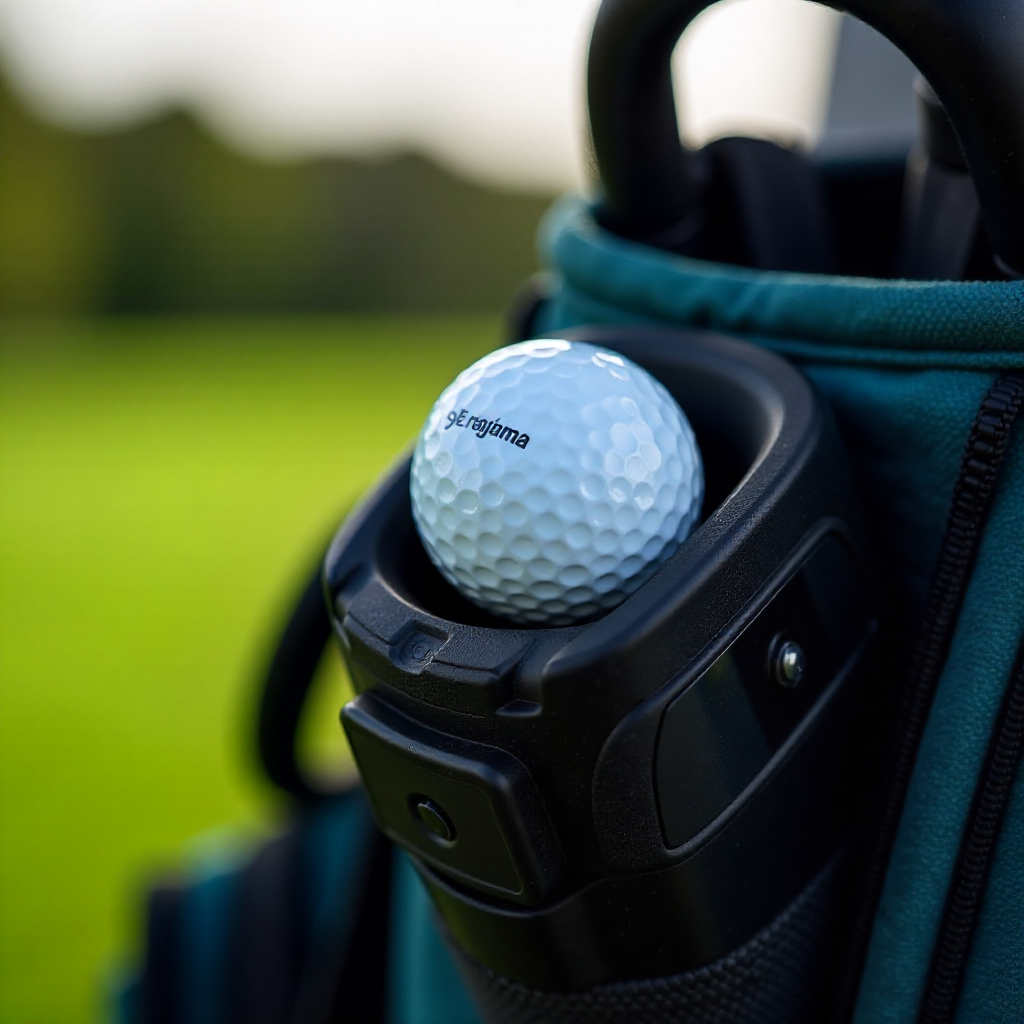
Beeping golf balls (sometimes called auditory golf balls or sound-emitting balls) contain a small electronic component that emits a repeating tone, allowing players to locate their ball after a shot. For B1 players especially, finding a ball in rough or near a hazard without this technology would require extensive guide assistance on every hole. Some models activate on impact; others run continuously. Battery life and weather resistance vary, so players competing in longer rounds should test their equipment in advance.
Auditory rangefinders translate yardage data into spoken output rather than a visual display. Paired with GPS course mapping, these devices announce distances to the green, hazards, and layup zones. Several GPS units now include vibration-feedback modes — useful when ambient noise makes audio output unreliable, such as on a windy links course. The vibration pattern (short pulses, long pulses, combinations) can be learned quickly and delivers information discreetly.
The practical limitation worth acknowledging: these devices require charging, and battery failure mid-round is a real scenario. Carrying a backup auditory ball and knowing the guide can fill gaps is part of any serious adaptive golfer's preparation.
Tactile and Alignment Aids for Setup and Swing
Tactile alignment aids help players position their body and club correctly before each shot, giving them a repeatable setup without relying on visual cues. Consistency in setup is where scoring is won or lost — and these tools make consistency achievable.
The most common alignment tools are tactile stance guides: physical rails or mats with raised edges that players place their feet against to achieve correct alignment relative to the target. The guide or caddie sets the alignment device; the player then self-orients from that fixed reference point. This reduces the number of verbal corrections needed and builds muscle memory over time.
Club-positioning aids work on a similar principle. A small tactile marker placed behind the ball gives the player a reference point for clubface angle at address. Some players use purpose-built alignment rods with textured grips that communicate direction through touch rather than sight.
For swing training specifically, hinged or guided swing trainers help players feel the correct swing plane. These are used heavily in practice settings and have been adopted by adaptive golf programs at both recreational and elite levels. The kinesthetic feedback from a guided swing trainer can accelerate skill development significantly — particularly for players who came to golf after losing vision and need to rebuild their sense of movement without visual reference.
Grip and Club Modifications
Grip modifications improve tactile feedback and help players maintain consistent hand position throughout the swing. Small differences in grip texture or shape can have a large impact on feel and confidence at address.
Adaptive golf gloves designed for low-vision players often feature enhanced palm padding and finger separation markers — raised seams or texture changes that help the player feel exactly where their hands sit on the club. Some gloves incorporate grip-locking materials that reduce slippage without requiring the player to grip harder, which helps maintain swing tempo.
Grip tape modifications are a low-cost, highly customizable option. Players and coaches work together to build up specific sections of the grip — adding texture at the top hand thumb position, for instance — creating a tactile map of correct hand placement. This is particularly useful for players with B2 or B3 classification who have some residual vision but benefit from the additional tactile confirmation.
At the club level, some adaptive golfers work with club fitters to adjust shaft weight and flex. A heavier shaft can improve feel during the swing, giving the player more proprioceptive information about clubhead position. Choosing heavier shafts for better feel means accepting slightly reduced swing speed — a genuine trade-off that each player needs to evaluate based on their game.
Putting and Short-Game Innovations
Putting is where adaptive equipment has arguably made the biggest difference in scoring, because the short game demands precision that is especially difficult to achieve without visual feedback on line and distance.
Specialized putting guides — essentially straight-edge rails or channels that the putter head travels along — allow players to practice and, in some recreational formats, use during play. These guides establish the target line physically, so the player can focus entirely on stroke mechanics and distance control. Competitive rules vary on what is permissible during official rounds, so players should verify with their governing body before relying on a guide in tournament play.
Tactile green-reading tools include textured slope indicators and physical models of green contours that players can feel before putting. Some adaptive programs use small raised-relief maps of each green, which the sighted guide and player review together before the hole. This kind of preparation turns what would be pure guesswork into informed decision-making.
Around the green, edge-detection aids — simple tactile markers placed at bunker lips or fringe boundaries — help players understand where they are relative to hazards. These are typically placed by the guide and removed before the shot, functioning as temporary orientation tools rather than permanent modifications to the course.
Accessible Course Materials and Digital Tools
Course information — scorecards, yardage books, hole layouts — is as important as any piece of equipment, and for years it was almost entirely inaccessible to blind golfers. That has changed substantially.
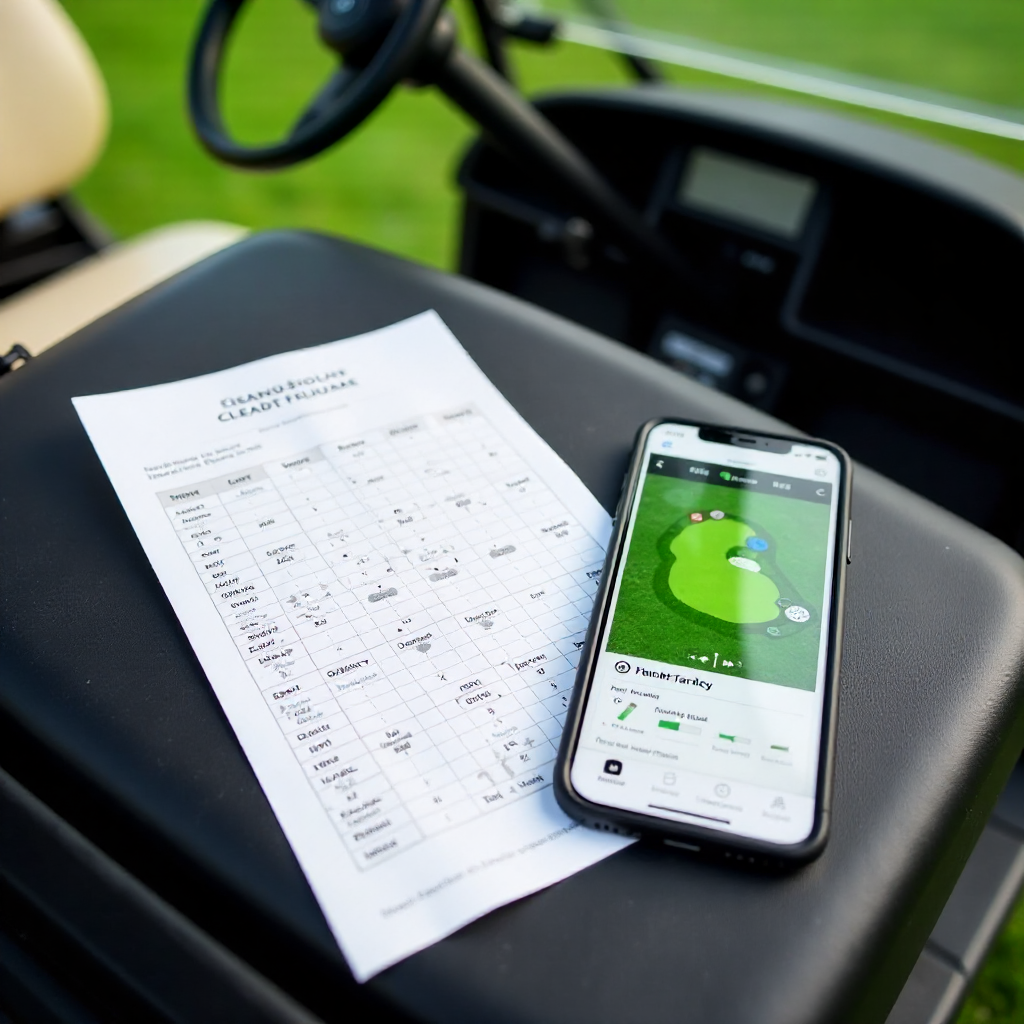
Braille-marked scorecards allow B1 players to track their own score independently, which matters both practically and psychologically. Knowing your own score without having to ask someone is a small thing that carries real significance. High-contrast yardage books with enlarged print and bold color differentiation serve B2 and B3 players who have usable but limited vision.
Accessible golf apps have expanded rapidly. Several applications now offer screen-reader compatibility, voice-guided course navigation, and audio descriptions of hole layouts. When paired with a GPS device, a well-designed app can give a player a complete audio picture of a hole before they step onto the tee — distances, hazard positions, green shape, and recommended landing zones. The assistive technology landscape has matured enough that off-the-shelf solutions often just need minor configuration for golf-specific use.
The gap that remains is standardization. Not every course offers accessible materials, and not every GPS mapping service has detailed enough data for adaptive use. Players traveling to unfamiliar courses often rely heavily on their guide for information that should, in principle, be available in accessible formats before they arrive.
Choosing the Right Equipment for Your Level of Vision
The right adaptive golf equipment depends on three factors: your IBSA classification, whether you're playing recreationally or competitively, and your budget. Starting with the most impactful items first makes more sense than trying to acquire everything at once.
For B1 players, auditory golf balls and a reliable GPS rangefinder with voice output are the highest-priority investments. Without these, the game is simply much harder to play. Tactile alignment aids come next, followed by grip modifications as the player develops their swing.
For B2 and B3 players, high-contrast course materials and grip texture modifications often provide the most immediate benefit. These players may find that a combination of modest equipment modifications and a skilled guide is sufficient for recreational play. As they move toward competition, adding auditory feedback devices and tactile green-reading tools becomes worthwhile.
Budget-wise, many adaptive golf programs — often affiliated with the USBGA or national equivalents — offer equipment loan libraries. Before purchasing, it's worth contacting a local adaptive golf organization to try equipment in a real playing context. What works well in a shop or a YouTube review doesn't always translate to the course.
Competitive players should also verify equipment legality with their governing body. Rules around auditory balls, putting guides, and electronic devices differ between formats, and the last thing anyone needs is a disqualification over a piece of gear that could have been swapped out in advance.
Frequently Asked Questions
Can totally blind (B1) golfers use the same equipment as low-vision (B2/B3) golfers?
Some equipment overlaps — grip modifications and tactile alignment aids benefit all classifications. However, B1 players depend far more heavily on auditory feedback devices (beeping balls, voice-output rangefinders) that B2/B3 players may not need. Equipment selection should always start from the player's specific classification and functional needs.
Are auditory golf balls legal in official adaptive golf competitions?
Legality varies by competition format and governing body. The USBGA and IBSA Golf have specific rules about permitted equipment. In many official events, auditory balls are permitted for B1 players. Always confirm with the tournament organizer before competing with any non-standard equipment.
Do visually impaired golfers always need a sighted guide, or can equipment replace that role?
Equipment reduces reliance on the guide for specific tasks — locating a ball, confirming alignment, reading distances — but does not replace the guide entirely, especially in competitive play. The guide provides course management, safety awareness, and real-time situational judgment that current technology cannot replicate.
Where can adaptive golf equipment be purchased or borrowed?
Adaptive golf organizations like the USBGA often maintain equipment lending programs. Specialized adaptive sports retailers carry many items. Some mainstream golf retailers now stock grip modifications and high-contrast materials. Contacting a local adaptive golf chapter is the fastest way to find both equipment and guidance on what to prioritize.
What organizations certify or recommend adaptive golf equipment?
The USBGA, IBSA Golf, and national blind golf associations in countries like the UK, Australia, and Canada provide guidance on equipment standards. No single global certification body exists yet for all adaptive golf gear, which makes organizational affiliation and peer recommendations from experienced adaptive golfers particularly valuable.